بسم الله الرحمن الرحيم
This month, after attending a talk by our very own Dr Shuruq Naguib on the life of Umm Kulthum bint Uqbah (RA), I found myself deeply moved. I walked in expecting a historical narrative; I walked out feeling as though I had encountered a woman whose courage and clarity still speak directly into our modern struggles. Her story didn’t just inspire me, it unsettled me, expanded me, and reminded me how far many of our inherited “norms” have drifted from the Qur’anic vision of female agency.
Umm Kulthum’s life is not a footnote in Islamic history. It is a blueprint.
A Woman Who Walked Alone and Changed History
In seventh century Arabia, a woman’s identity was often tied to her male guardians. Yet Umm Kulthum did something astonishing: she migrated alone from Makkah to Madinah purely for the sake of her faith. No escort. No protection. No permission.
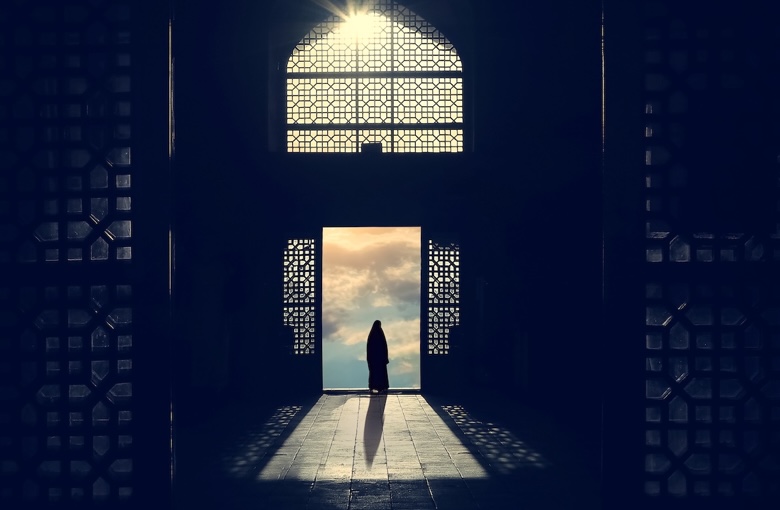
She was the first woman to emigrate after the Treaty of Hudaybiyyah, not as someone’s daughter or wife, but as a believer answering her own spiritual calling. I keep returning to this image of her: a lone woman crossing the desert, choosing Allah over everything familiar. We should never underestimate the spiritual courage of our foremothers. Her journey reminds us that women in Islam are not spiritually dependent beings. They are responsible for their own relationship with Allah and accountable for their own destinies.
When she reached Madinah, her brothers demanded that she be returned under the terms of the treaty. But Umm Kulthum refused to be treated as property. She went directly to the Prophet ﷺ and argued with clarity and conviction that the treaty did not account for the vulnerability of women. If forced back, she knew she would face persecution and feared she would not be able to practise her faith.
Her plea was not only heard, it was answered by revelation. Allah revealed the verse in Surah Al Mumtahanah (60:10):
"When believing women come to you as emigrants, examine them... And if you know them to be believers, do not return them to the disbelievers."
This powerful verse overrode a major political treaty, established a new legal category for believing women, protected their faith and safety above political agreements, and affirmed women as independent moral agents.
Perhaps the most remarkable part of her story is that she was honoured with the Qur'anic title Al Mumtahanah – "The Examined One"; a woman whose sincerity was tested by the Prophet ﷺ and affirmed by Allah Himself.
A Legacy That Challenges Misconceptions
Umm Kulthum was not only courageous; she was also a scholar, a narrator of hadith, and a woman whose life contributed to the development of Islamic jurisprudence.
Her legacy quietly but firmly dismantles many modern misconceptions. She demonstrated that a woman's value comes from her faith, character and sincerity, not her gender. Women possess their own spiritual and legal identity and stand before Allah as individuals, not as extensions of men.
She also showed that a woman's voice matters, and that her experiences and appeals for justice can shape divine guidance and Islamic law. Most significantly, she reminds us that empowered Muslim women are not a modern invention. Female strength, leadership and moral courage have been part of Islam from the very beginning.
The more I learn about her, the more I realise how much we have lost by shrinking women's roles into cultural boxes that Islam never created.
Her Marriages: A Challenge to Cultural Expectations
Her marital history is equally revealing and, honestly, quite refreshing.
Umm Kulthum took steps that many women today would still find difficult. She offered herself in marriage to the Prophet ﷺ, demonstrating confidence and agency. She sought his counsel when choosing between suitors, negotiated conditions within her marriage contract, ended a marriage she found emotionally difficult despite her husband's respected status, and married multiple times without stigma or loss of dignity.
One story left a particularly strong impression on me.
During her marriage to Zubayr ibn al Awwam, she found his harshness difficult and requested a divorce. Although he initially refused, she persisted until he divorced her with a single talaq. Shortly afterwards she gave birth, completed her 'iddah and continued with her life.
There was no shame attached to her decision and no questioning of her character.
The Prophet ﷺ did not rebuke her. Instead, he advised Zubayr to reconcile with her, an acknowledgement that her feelings and wellbeing mattered. Zubayr chose not to do so.
Her next marriage, to Abd al Rahman ibn Awf, lasted more than twenty years and they were blessed with six children. Her previous marriages did not diminish her worth. She remained respected, valued and loved.
This stands in stark contrast to cultural attitudes still found in some communities today, where divorced or widowed women are unfairly viewed as undesirable or somehow at fault.
After Abd al Rahman's passing, she married Amr ibn al As but sadly passed away only one month later. Even in later life she continued to be regarded as a respected and valued woman, challenging cultural assumptions that older widows should remain unmarried.
Lessons That Still Speak to Us Today
Umm Kulthum bint Uqbah (RA) is far from a forgotten figure in Islamic history. Her life challenges many of the cultural assumptions that continue to shape perceptions of Muslim women today. She reminds us that Islam recognised women as full, independent individuals who could make informed choices, seek justice, end relationships when necessary, and live with dignity and autonomy.
Her story reminds us that:
• Women's decisions were respected by the Prophet ﷺ.
• Women's autonomy is often restricted by culture rather than Islam.
• Women have the right to choose their spouses.
• Women may seek divorce when a marriage is no longer healthy.
• Women can remarry without stigma or loss of dignity.
In a world where women are often told to be silent, obedient and passive, Umm Kulthum's voice continues to echo across the centuries. Her life is not an exception; it is an example. It invites us to re examine the cultural practices that have obscured Islam's empowering vision of women.
Her story offers more than historical inspiration. It provides a psychological framework and a Qur'anic affirmation of female agency. For Muslim women navigating the tension between faith and culture, her life offers a liberating reminder of what Islam truly permits and what it honours.
I left Dr Shuruq's talk feeling as though Umm Kulthum had reached across the centuries to remind us of something profound: Islam never asked women to shrink. It asked them to stand with faith, dignity and purpose, while honouring the rights Allah has given them.
Perhaps the essence of her life can best be captured in these words:
"A woman has the right to choose her path, to speak her mind, and to live a life of purpose and meaning on her own terms."
Written by Dr Razia Bhatti-Ali